
Meta description: Learn why fall is an ideal season for protective styling, plus practical tips for low-tension natural hair care, glueless braided wigs, satin bonnets, and edge-friendly routines.
Suggested URL: /blogs/news/fall-protective-styling-guide-for-edges
Fall brings a beautiful reset: new routines, richer hair colors, cozy beauty rituals, and a little more time to focus on self-care. It is also an ideal season to give your edges a break from constant brushing, slicking, stretching, and styling.
If your hairline has been through a busy summer of ponytails, heat styling, frequent installs, or daily manipulation, fall protective styling can help you simplify your routine. The goal is not to hide your natural hair or chase perfection. It is to create a gentler routine that protects your strands, reduces unnecessary tension, and helps you feel confident every day.
From low-tension braids to a glueless braided wig, there are many beautiful ways to make protective styling part of your seasonal routine.
Why fall can be a helpful season for your edges
As the weather changes, your hair care needs may change with it. Cooler temperatures, lower humidity, wind, and indoor heating can make hair feel drier or more prone to friction. Seasonal transitions can also bring changes in your schedule, which may lead to more rushed styling, frequent restyling, or longer periods between wash days.
Your edges are especially important to treat gently because they are located around the hairline and are often exposed to repeated brushing, gels, tight styling, and friction. A fall routine that minimizes manipulation can make your everyday hair care feel easier and more intentional.
Protective styling may help you:
- Reduce daily combing and brushing
- Keep the ends of your natural hair tucked away
- Limit repeated heat styling
- Create more time between full restyles
- Keep your beauty routine simple during busy weeks
- Explore new looks without changing your natural hair
Protective styling is not about wearing one style continuously. It is about balance, proper care, and choosing options that feel comfortable from the beginning.
What makes a protective style edge-friendly?
A style can look beautiful and still create too much tension. When choosing protective styles for natural hair, comfort should be one of your first considerations.
1. Choose low tension
A low-tension style should feel secure without pulling, pinching, or creating discomfort around your hairline. If a style causes pain or a persistent tight sensation, it is too tight for your needs.
Ask for:
- Larger, looser sections near the front
- Minimal pulling around the temples
- A soft, comfortable foundation
- Gentle styling around baby hairs
- Secure placement without excessive tightening
Try not to create an ultra-sleek hairline every day. Your edges do not need to be aggressively brushed or heavily molded to look polished. A soft, natural finish can be just as beautiful.
2. Avoid repeating the same tension pattern
Even a comfortable style may become stressful if the same sections are pulled in the same direction repeatedly. Consider changing your part, alternating between styles, and allowing your hairline to rest between installs.
For example, you might rotate between:
- Loose twists
- Large braids
- A soft bun with minimal tension
- A glueless wig
- A short wear-and-go style
The best protective styling routine is one that gives your hair variety and gives you room to pay attention to how your scalp and edges feel.
Start with a moisturized foundation
Before installing braids, a wig, or another protective style, begin with clean, detangled, and moisturized hair when possible. This does not require a complicated routine.
A simple foundation can include:
- Gently cleanse your hair and scalp according to your normal routine.
- Follow with a moisturizing conditioner.
- Detangle carefully, starting at the ends and working upward.
- Apply a lightweight leave-in or moisturizer.
- Allow your hair to dry fully before covering it.
- Create a loose foundation that does not pull at the hairline.

Avoid applying heavy layers of product directly to the scalp if they create buildup or make your foundation difficult to maintain. Your routine should leave your hair feeling nourished and manageable, not coated or weighed down.
If your hairline is already feeling tender, simplify the foundation even further. You may prefer a style that requires little to no manipulation at the front.
How a glueless braided wig can support a simpler routine
A glueless braided wig can be a convenient option when you love the look of braids but want more flexibility in your routine.
Anaya’s Beauty’s 24-inch Boho Box Braids Wig is listed with transparent lace, a glueless design, and a pre-plucked knotless braided look. Rather than spending hours creating a new braided style, you can prepare your natural hair gently underneath and enjoy a ready-to-wear finish.
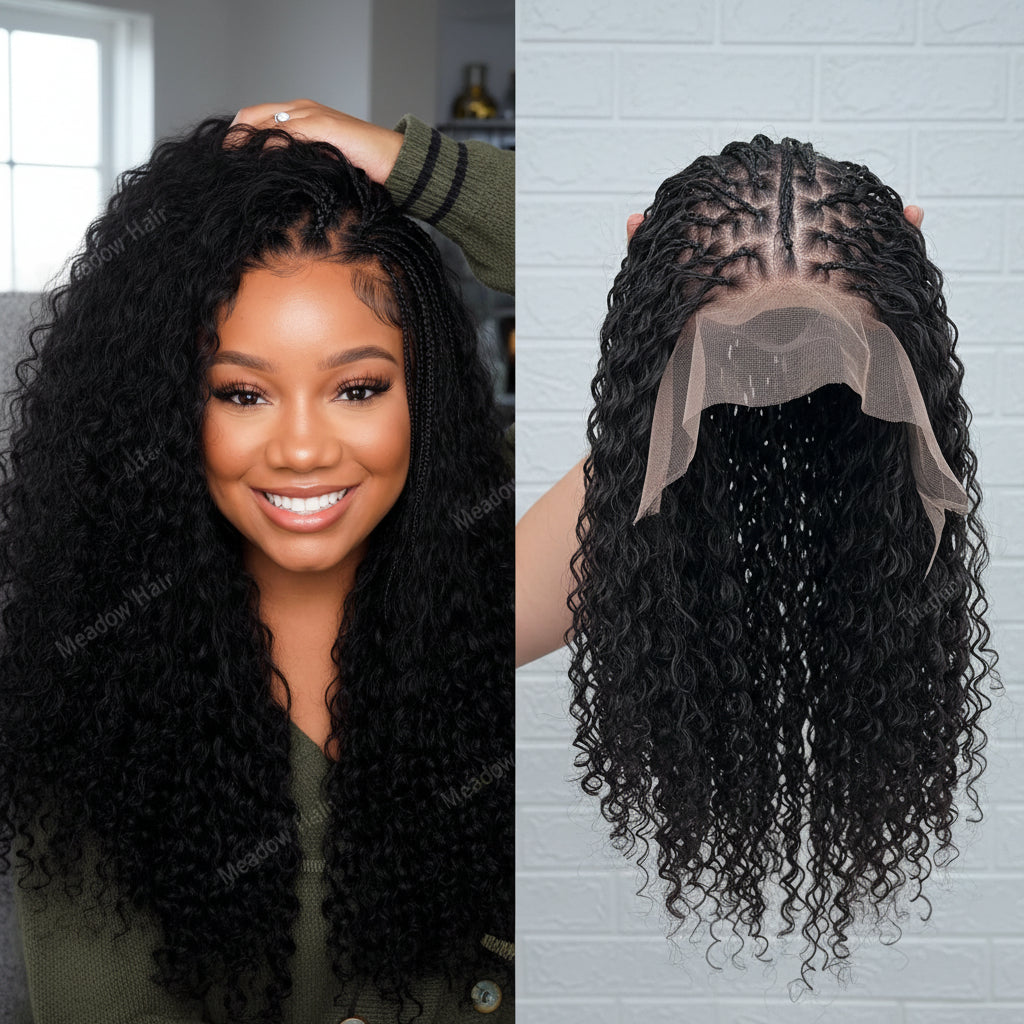
A glueless wig may help reduce daily manipulation because it does not require adhesive along the hairline. However, “glueless” does not automatically mean every installation will be tension-free. The fit, foundation, clips, combs, elastic, and wear time all matter.
For a more edge-conscious installation:
- Keep the braids underneath flat but not tight.
- Avoid creating a small, tight braid directly at the hairline.
- Check that the wig cap is not pressing uncomfortably.
- Position combs and clips away from fragile areas when possible.
- Do not force a wig that feels too tight.
- Remove the wig when your scalp needs a break.
You can also browse Anaya’s Braids collection for braided hair options and braided wig styles designed to make protective styling more accessible.
Braided wigs and natural hair: what to remember
Braided wigs are versatile, but they still need to be treated as part of a complete hair care routine. Your natural hair remains underneath, so it needs attention before, during, and after wear.
Try this simple checklist:
Before wearing
- Cleanse and moisturize your natural hair.
- Make sure your hair is completely dry.
- Choose a loose, comfortable foundation.
- Inspect the inside of the wig for clips, combs, or areas that may rub.
- Adjust the fit before wearing it for a full day.
While wearing
- Pay attention to pressure, rubbing, or tenderness.
- Avoid tightening the wig throughout the day.
- Keep your scalp clean according to your normal routine.
- Use light moisture where needed instead of layering heavy products.
- Avoid wearing the same style continuously without a break.
After removing
- Take down your foundation gently.
- Detangle slowly, beginning at the ends.
- Cleanse or refresh your scalp as needed.
- Give your natural hair and hairline time without added tension.
- Reassess whether the same fit and foundation still feel comfortable.
Protective styling works best when it includes maintenance and breaks, not just coverage.
Satin bonnet care for fall nights
Nighttime friction can affect how your style looks and how your hair feels in the morning. A satin bonnet can help reduce friction between your hair and bedding while helping preserve a wig, braids, twists, or curls.
Choose a bonnet that gives your hair enough room without squeezing your hairline. If you wear a braided wig or long protective style, look for a longer design that does not compress the ends.
Anaya’s Beauty Tools & Accessories collection includes options such as the Long Bonnet Braid Bonnet, which is designed to accommodate longer braids and protective styles.

For best results:
- Put your bonnet on gently instead of dragging it across your edges.
- Keep the band comfortable and avoid excessive pressure.
- Make sure your hair and scalp are dry before covering them.
- Wash the bonnet regularly according to its care instructions.
- Consider a satin pillowcase as a backup if your bonnet moves overnight.
Remember to schedule scalp breaks
Protective styling should never mean ignoring your scalp or wearing one style indefinitely. Plan regular breaks based on your hair’s needs, your comfort, and the style you are wearing.
During a break, you can:
- Cleanse and condition your natural hair
- Check your edges for dryness or breakage
- Detangle carefully
- Wear your hair loose or in a very gentle style
- Reapply moisture as needed
- Decide whether you want to repeat the same style
If you notice ongoing pain, irritation, or changes that concern you, pause the style and speak with a dermatologist or qualified hair professional.
A simple fall protective styling routine
Use this five-step routine as a starting point:
- Prep gently: Cleanse, condition, detangle, and moisturize.
- Build loosely: Choose a flat, comfortable foundation with minimal tension.
- Protect your edges: Keep brushing, gels, and adhesive away from areas that feel fragile.
- Cover at night: Use a comfortable satin bonnet to reduce friction.
- Take breaks: Remove the style regularly and give your natural hair time without added tension.
Fall is the perfect time to make your beauty routine feel calmer, more flexible, and more supportive of your natural hair. You can still enjoy bold textures, long braids, soft waves, and glamorous transformations while choosing styles that respect your comfort.
Your edges do not need to be constantly slicked, pulled, or restyled to look beautiful. With a moisturized foundation, low-tension installation, gentle nighttime care, and regular scalp breaks, protective styling can become a confident form of self-care.
Ready for your next fall look? Explore Anaya’s Beauty wigs and shop the Braids collection for glueless braided wigs and protective styling options made for expressing your beauty with ease.
For additional reading on gentle styling ideas, see The Best Low-Tension Natural Hairstyles for Fall from L’Oréal Paris.
0 comments